

Table of Contents
- Why Permits Matter for Your Plumbing Project
- Understanding Orange County Plumbing Code Requirements
- Permits Required for Slab Leak Repairs
- Permits Required for Whole-Home Repiping Projects
- The Permit Application Process and Timeline
- How Precision Plumbing Handles Permitting for You
- Inspection Requirements After Permitted Work
- Common Permit Mistakes That Delay Projects
- Cost and Budget Considerations for Permitted Work
- Choosing a Licensed Contractor to Manage Permits
- Next Steps: Getting Your Project Started
- Contact Precision Plumbing for Permit-Compliant Solutions
- Frequently Asked Questions (FAQ)
Why Permits Matter for Your Plumbing Project
Plumbing permits exist to protect your home’s safety and your property value. When work happens without permits, you face hidden risks: unpermitted plumbing can fail inspection when you sell, create liability issues, and void insurance coverage if something goes wrong. Orange County requires permits for major plumbing work because these projects affect water quality, drainage systems, and structural integrity.
We understand that permits can feel like bureaucratic overhead, but they’re a safeguard. A permitted job means a licensed inspector verifies the work meets current code standards, protecting you from costly mistakes. If you ever need to sell your home or make an insurance claim related to plumbing, proper permits create a clear, documented record.
Actionable takeaway: Always confirm your plumbing contractor pulls permits before work begins. It’s a sign of professionalism and legal compliance.
Understanding Orange County Plumbing Code Requirements
Orange County follows the California Plumbing Code, which is based on the International Plumbing Code (IPC) with state amendments. This code covers water supply lines, drainage systems, venting, water heater installation, and backflow prevention. The specific requirements can vary slightly between Orange County unincorporated areas and individual city jurisdictions (like Newport Beach, Irvine, or Huntington Beach), so the exact standards depend on your location.
Key areas covered by code:
- Water supply line materials and sizing
- Trap seals and venting for drainage
- Water heater placement and safety devices
- Backflow prevention devices
- Clearances and accessibility for maintenance
Licensed contractors stay current with these codes, but homeowners don’t need to memorize them. What matters is that your contractor knows them and applies them to your project. We recommend an on-site inspection by your local building department to confirm all work meets current standards.
Permits Required for Slab Leak Repairs
Slab leak repair work usually requires a permit because it involves breaking into the foundation, rerouting water lines, or installing new pipes. This is a structural and plumbing modification that building departments need to oversee.
When you have a slab leak, the permit process typically includes:
- Initial diagnostic inspection (no permit needed yet)
- Permit application with repair plan and drawings
- Building department review and approval
- Repair work performed by a licensed plumber
- Final inspection by the building department
A common scenario: your contractor detects a leak under your kitchen using non-destructive leak detection technology. The repair plan might involve rerouting the water line above the slab rather than breaking concrete. This plan gets submitted with the permit application. Once approved, the work proceeds and is inspected upon completion.
The permit fee varies by city and project scope, typically ranging from $100 to $400 for residential slab leaks. Timeline depends on your local building department’s workload, but we typically see approval within 5 to 10 business days.
Permits Required for Whole-Home Repiping Projects
A whole-home repiping project replaces old water supply lines throughout your house. This is definitely a permitted project because it affects the entire potable water system. Whether you’re upgrading from galvanized steel pipes (prone to corrosion) or installing new PEX tubing, permits and inspections are required.

Repiping permits usually involve:
- Detailed plans showing the new piping layout
- Materials specifications (PEX, copper, or other approved materials)
- Water pressure and sizing calculations
- Building department review before work starts
- Rough inspection during installation
- Final inspection after all connections are complete
This multi-step inspection process protects water quality and ensures proper drainage slopes and backflow prevention. Repiping is a major undertaking, and the permit process keeps everyone accountable.
Budget roughly 2 to 3 weeks for the full permit and inspection cycle, depending on your city and contractor availability.
The Permit Application Process and Timeline
The permit application starts with your contractor gathering project details: scope of work, materials, location, and expected cost. Most Orange County cities now accept permit applications online through their building department website, though some still accept paper applications.
Here’s what a typical timeline looks like:
- Day 1-2: Contractor submits completed permit application with plans and supporting documents
- Day 3-7: Building department reviews application; may request clarifications or revisions
- Day 8-10: Permit is approved and issued; work can begin
- During work: Rough inspections occur at key stages (e.g., pipes exposed but not yet covered)
- After work: Final inspection confirms all code compliance
Delays often happen when applications are incomplete or plans don’t match code requirements. We recommend hiring a licensed contractor early so they can prepare accurate plans before submitting.
How Precision Plumbing Handles Permitting for You
We manage the entire permit process on your behalf. Our licensed plumbers pull permits, prepare required documentation, coordinate with building inspectors, and schedule inspections at the right stages. You don’t have to navigate the building department or worry about compliance details.
Here’s our process:
- We visit your home and diagnose the issue
- We prepare detailed plans and a cost estimate (free, no obligation)
- We submit the permit application to your city or county
- We keep you informed as the application is reviewed
- We perform the approved work and arrange all inspections
- We obtain the final sign-off and provide you with all permit records
This approach saves you time and ensures nothing gets missed. We know Orange County’s codes and local requirements because we’ve worked across South Orange County for over 25 years.
Inspection Requirements After Permitted Work
Every permitted plumbing project requires at least one final inspection by your local building department. Some larger projects (like whole-home repiping) require interim “rough” inspections before walls are closed or concrete is poured.
During inspection, the building official checks:
- Water supply lines are properly sized and supported
- All connections are secure and code-compliant
- Drainage slopes are adequate (typically 1/4 inch per foot)
- Vent pipes are properly installed and vented to the roof
- Backflow prevention devices are installed where required
- Water heaters have proper safety devices and clearances
If inspection reveals issues, they must be corrected before final approval. This is actually beneficial: it catches problems while they’re still accessible, not after the wall is sealed.
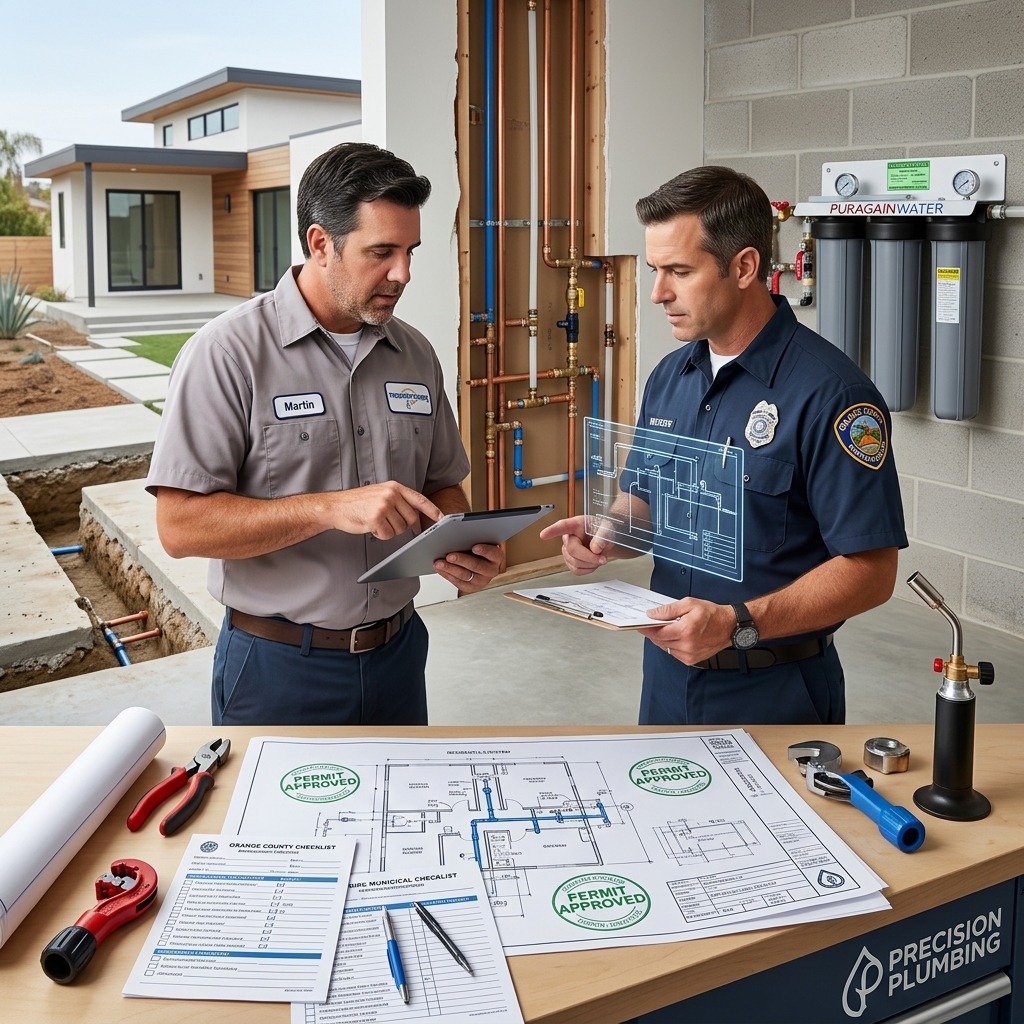
We stay on-site during inspections to answer questions and address any corrections immediately. This keeps your project moving forward without unnecessary delays.
Common Permit Mistakes That Delay Projects
Many plumbing projects get delayed because of preventable permit mistakes. Understanding these helps you avoid them:
Incomplete applications: Missing plans, specifications, or contractor license information sends the application back for revisions.
Wrong jurisdiction: Submitting to the county when your property falls under city jurisdiction (or vice versa) delays processing.
Undersized estimates: If your estimate is significantly lower than actual work, the building department may question the scope and request clarification.
Unlicensed contractors: If your contractor isn’t licensed, the permit can’t be issued. Always verify contractor licensing through the California Department of Consumer Affairs.
Scheduling inspection delays: Not calling for inspection promptly after rough work is complete means inspectors might have longer wait times.
We avoid these mistakes by handling applications professionally and maintaining strong relationships with local building departments. We schedule inspections immediately when work stages are ready.
Cost and Budget Considerations for Permitted Work
Permit costs themselves are modest compared to the overall project, typically $150 to $500 for residential plumbing work depending on scope and your city. However, the time and coordination involved adds some overhead to the project timeline.
Budget considerations:
- Permit fee (city/county dependent)
- Contractor time to prepare plans and submit applications
- Inspection coordination and potential rework if corrections are needed
- Materials for the actual work (pipes, fittings, water heater, etc.)
Some homeowners ask if we can skip permits to save money and time. We don’t recommend this. Unpermitted work often costs more in the long run through failed home inspections, insurance complications, or needing to redo work to code when you eventually sell.
We provide free estimates that include permit costs, so there are no surprises. Call us at 949-235-1188 for a no-obligation quote.
Choosing a Licensed Contractor to Manage Permits
Your contractor should be licensed by the California Contractors State License Board (CSLB). Check their license number on the CSLB website to verify active status, any disciplinary history, and their scope of work (general plumbing, water heater installation, etc.).
A licensed contractor:
- Knows current code requirements
- Has relationships with local building departments
- Carries proper insurance and bonds
- Can pull permits in their own name
- Stands behind their work with accountability
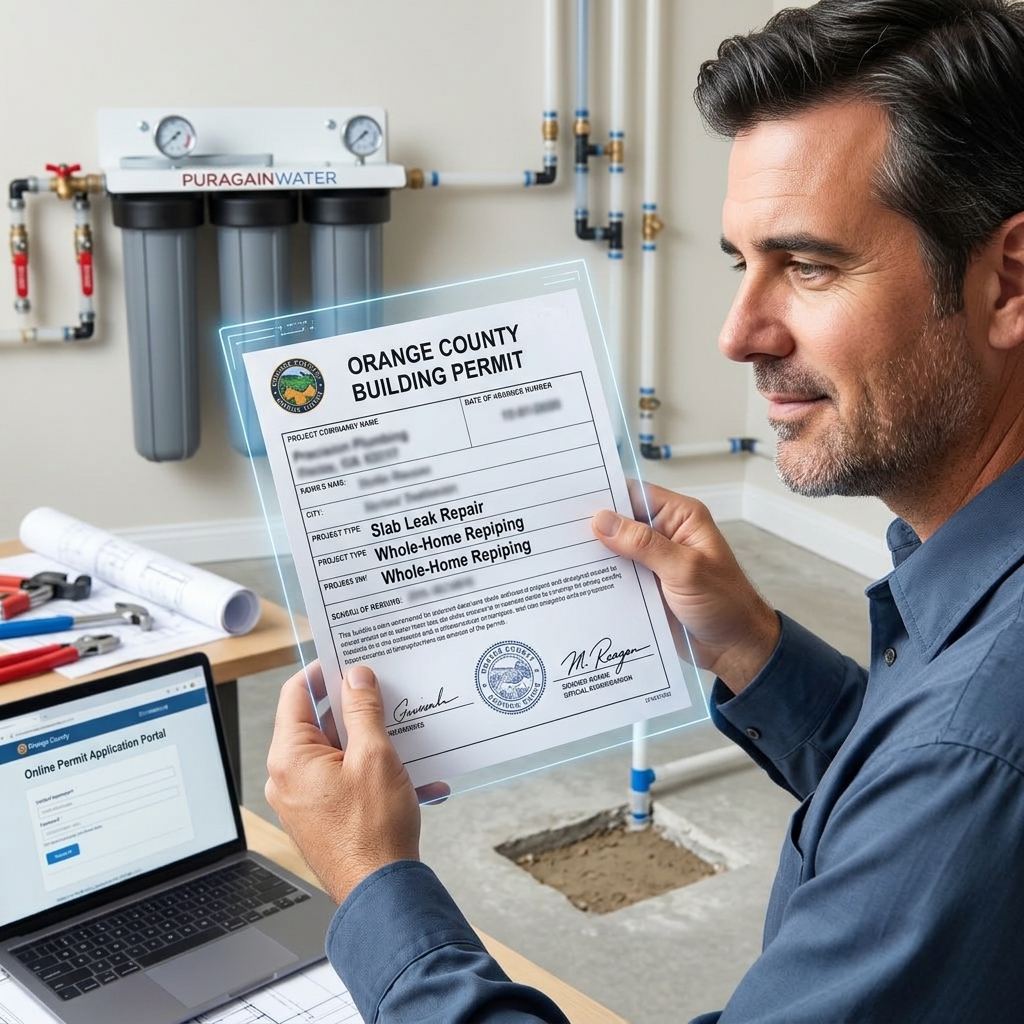
Ask potential contractors about their permit process during the estimate. How do they handle applications? Do they coordinate inspections? Can they show you examples of recent permitted projects? A contractor who answers confidently and clearly is typically reliable.
We’ve pulled thousands of permits across Orange County and understand every jurisdiction’s quirks and requirements. Our 25+ years in the business means we know the inspectors and can navigate the process smoothly.
Next Steps: Getting Your Project Started
If you’re facing a slab leak, considering repiping, or need water heater installation, the first step is a professional diagnosis. Call us at 949-235-1188 for immediate service or to schedule a free estimate.
During your estimate, we’ll:
- Assess your plumbing situation (using non-destructive slab leak detection if needed)
- Explain what permits are required
- Provide a timeline and itemized cost estimate
- Answer all your questions about the process
We offer 24/7 emergency service if you’re dealing with an active leak. For non-urgent work, we’ll schedule at your convenience and handle all permitting, coordination, and inspections.
Our 100% satisfaction guarantee means you’re protected throughout the project. We’re licensed, insured, and committed to doing the job right the first time.
Contact Precision Plumbing for Permit-Compliant Solutions
We’re your trusted partner for permitted plumbing work in Orange County. Whether it’s slab leak repair, whole-home repiping, or energy-efficient water heater installation, we manage the entire process from diagnosis through final inspection.
Call us at 949-235-1188 or visit https://Precisionplumbingoc.com to schedule your free estimate. We’re available 24/7 for emergencies and offer senior and veteran discounts on all services.
Your home’s plumbing is too important to cut corners. Let us handle the permits, the code compliance, and the inspections while you focus on your life.
Frequently Asked Questions (FAQ)
Do we handle permit applications for slab leak repairs and repiping projects?
Yes, we manage the entire permitting process for you. When you call us at 949-235-1188, we’ll handle the paperwork, scheduling inspections, and ensuring your project meets Orange County plumbing codes. Our team knows the local requirements inside and out, so you don’t have to worry about delays or compliance issues.
Why do slab leak repairs and whole-home repiping require permits in Orange County?
Permits protect your home and ensure the work meets safety and building standards. Without proper permits, you could face issues when selling your property, and unpermitted work may not be covered by insurance. We recommend always going through the official process, and we’ll explain exactly what’s needed during your on-site inspection.
How long does the permit process typically take for repiping work?
The timeline usually ranges from one to three weeks, depending on Orange County’s current workload and inspection schedules. We coordinate directly with local inspectors and keep the process moving efficiently so we can get your water flowing safely again without unnecessary delays.