

Table of Contents
- Why Orange County Homeowners Are Switching to Tankless Water Heaters
- The Real Cost of Traditional Tank Water Heaters
- How Tankless Water Heaters Deliver Endless Hot Water On-Demand
- Energy Efficiency Savings That Add Up Year After Year
- Ideal Tankless Solutions for Orange County Homes and Businesses
- What to Expect During Professional Tankless Installation
- We Handle Your Tankless Water Heater Setup From Start to Finish
- Common Questions About Making the Tankless Transition
- Why We Recommend On-Site Inspections Before Installation
- Get Your Free Estimate Today
- Frequently Asked Questions (FAQ)
Why Orange County Homeowners Are Switching to Tankless Water Heaters
More Orange County homeowners are making the switch to tankless water heaters because they solve two persistent problems: running out of hot water mid-shower and wasting energy heating water you’re not using. Unlike traditional tank systems that store 40-50 gallons of water constantly kept warm, tankless units heat water on-demand as it flows through your pipes. This shift reflects a larger trend toward energy efficiency and reliability in South Orange County homes.
Over our 25 years in the plumbing industry, we’ve watched this transition accelerate. Homeowners tell us they appreciate not having to choose between a full shower and someone doing laundry. They also notice lower utility bills and appreciate the space freed up in their garage or closet. If you’re considering upgrading your water heater, understanding what makes tankless systems attractive is the first step toward making an informed decision.
What to do next: Assess your current water heater’s age (if over 10 years) and whether your household experiences frequent hot water shortages. Both are strong indicators that a tankless upgrade could improve your daily comfort.
The Real Cost of Traditional Tank Water Heaters
Traditional tank water heaters carry hidden costs that extend beyond the initial purchase price. A 40-50 gallon tank typically lasts 10-15 years, costs $800-$1,500 to install, and consumes energy continuously to maintain temperature even when nobody’s using hot water. Over a decade, that constant standby energy consumption adds up to significant expense.
Beyond energy costs, tank systems require regular maintenance (flushing sediment annually), take up valuable space, and eventually fail with little warning. We’ve responded to countless 2 a.m. emergency calls from homeowners whose tanks ruptured and flooded their garages. Tank replacement becomes urgent, forcing homeowners to choose quickly without time for comparison or planning.
Tankless units typically cost more upfront ($2,000-$3,500 installed for most homes) but eliminate standby losses entirely and last 15-20 years with minimal maintenance. When you factor in lower operating costs, fewer emergency repairs, and extended lifespan, the return on investment becomes clear within 5-8 years for most households.
What to do next: Calculate your annual water heating costs by reviewing 12 months of utility bills. Tankless savings are easiest to see when you start with real baseline numbers.
How Tankless Water Heaters Deliver Endless Hot Water On-Demand
Tankless water heaters use a simple principle: instant heating rather than storage. Cold water enters the unit, flows across a high-powered heating element (gas or electric), and emerges at your desired temperature within seconds. You never run out because there’s no tank to empty, only a continuous flow limited by your home’s water line capacity and the heater’s output rating.
In practice, this means you can run multiple showers, fill a bathtub, and run the dishwasher simultaneously without the cascade of cold water that plagues tank households. For larger homes or multi-generational families, this on-demand capability is genuinely transformative. A guest shower, laundry, and kitchen sink can all deliver hot water at the same time.
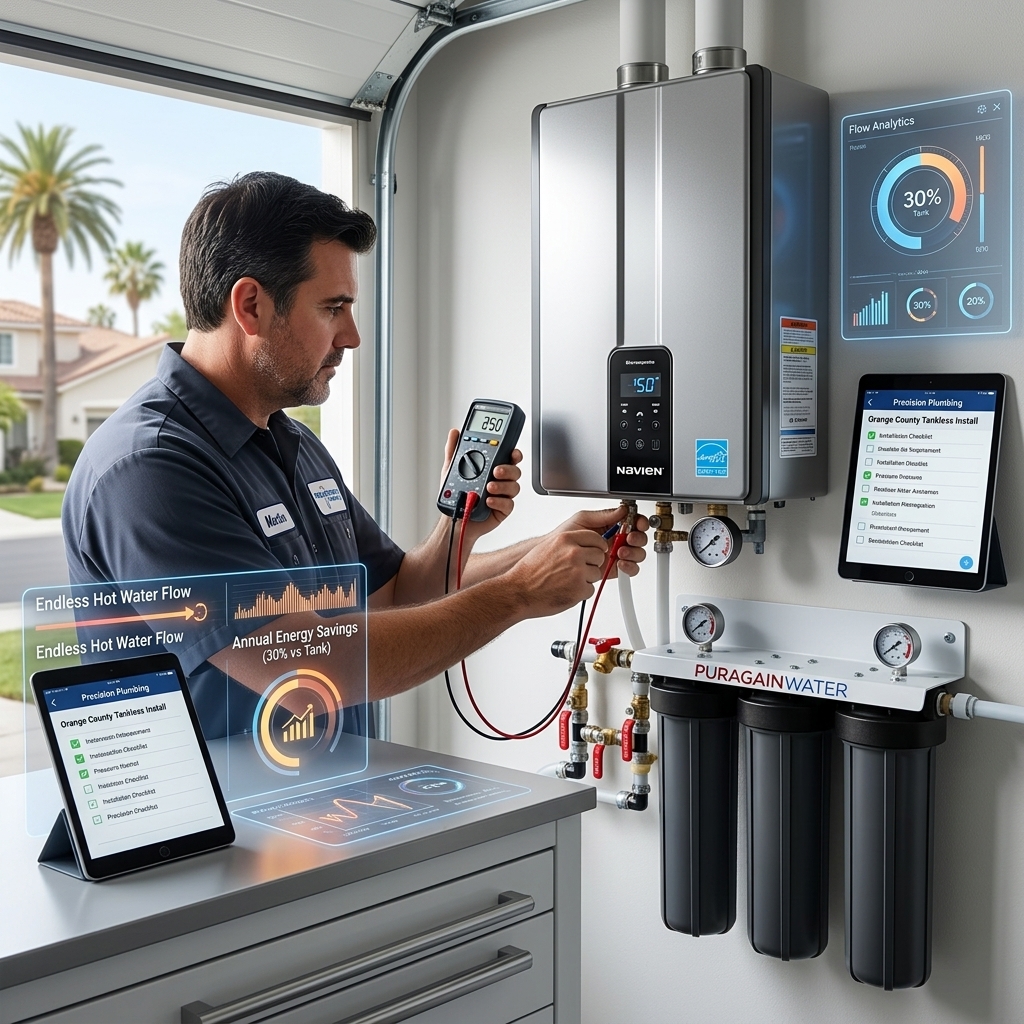
The only meaningful limitation is flow rate (measured in gallons per minute). Most Orange County homes need units delivering 4-8 gallons per minute, which handles typical usage patterns without issue. We’ll assess your household’s peak demand during an on-site inspection to ensure you select the right capacity.
What to do next: List your typical simultaneous hot-water uses (showers, appliances, outdoor hose) to determine what flow rate suits your home.
Energy Efficiency Savings That Add Up Year After Year
Tankless systems reduce energy consumption by 24-34% compared to tank water heaters, according to U.S. Department of Energy data. That efficiency comes from eliminating standby losses, the energy wasted keeping 40-50 gallons perpetually warm. Even when nobody uses hot water, a traditional tank works constantly to replace heat loss through the insulation.
For a family spending $500-600 annually on water heating, switching to a high-efficiency tankless unit typically saves $120-180 per year. Over a 20-year lifespan, that’s $2,400-3,600 in direct savings, before accounting for maintenance or emergency repair avoidance. Some Orange County homeowners with larger households or frequent hot water use see even greater reductions.
Modern energy-efficient water heaters also qualify for utility rebates in many Orange County areas. We recommend checking with your local water utility or Southern California Edison for current rebate programs, which can offset installation costs by $300-1,000.
What to do next: Contact your utility provider about tankless rebates before purchasing. Rebate availability and amounts change seasonally, so timing matters.
Ideal Tankless Solutions for Orange County Homes and Businesses
Our tankless water heaters serve residential homes, multi-unit properties, and small businesses throughout Orange County. Gas-fired units work well for homes with existing natural gas lines and deliver high output, ideal for larger households. Electric tankless heaters suit smaller homes, condos, or apartments where gas installation isn’t practical.
Whole-home systems provide hot water throughout your property, while point-of-use units serve specific fixtures (a guest bathroom, outdoor shower, or workshop sink). For many Orange County homeowners, a single whole-home unit replaces their traditional tank entirely. Businesses with continuous hot-water demand, such as restaurants or salons, benefit enormously from the reliability and cost predictability.
During our consultation, we’ll evaluate your home’s current plumbing, electrical or gas capacity, venting options, and hot-water usage patterns. This assessment determines whether a gas or electric unit makes sense, what capacity you need, and whether your infrastructure requires upgrades.
What to do next: Identify your home’s fuel type (natural gas, electric, or propane) and whether you have adequate ventilation near your current water heater location.
What to Expect During Professional Tankless Installation
Installing a tankless water heater involves several steps: disconnecting the old system, preparing the location, installing the new unit, connecting water and gas or electrical lines, and testing for proper operation and safety. The entire process typically takes 4-6 hours for a straightforward residential installation.
Gas installations require venting either through your existing chimney or a new dedicated vent pipe. Electric units need sufficient amperage on your home’s electrical panel; many older homes require panel upgrades (a separate service we can arrange). Both scenarios are manageable with proper planning.
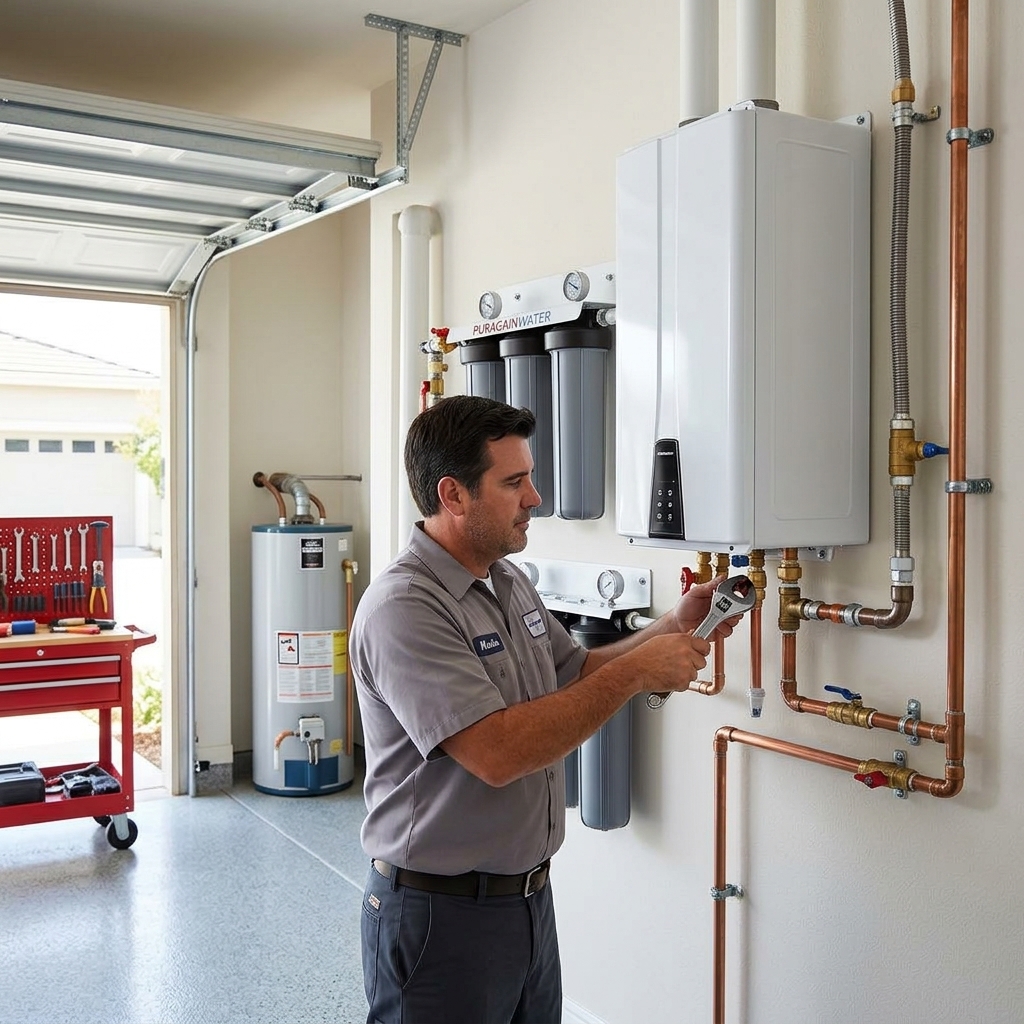
We handle permitting and inspections throughout the process. Orange County requires licensed and insured contractors to obtain permits and pass final inspection before activation. This protects you legally and ensures your system meets all safety codes. We’ll explain each step and answer questions as we go.
What to do next: Confirm whether your current water heater location has adequate space and ventilation for a tankless unit, or if relocation is necessary.
We Handle Your Tankless Water Heater Setup From Start to Finish
From your initial call through final inspection and activation, we manage every detail. Our licensed and insured technicians assess your home’s specific needs, provide a no-obligation quote, coordinate permitting with Orange County authorities, perform the installation, and ensure everything passes inspection.
We don’t hand off the job mid-stream or leave you wondering what’s next. You get a single point of contact, transparent communication about timelines and costs, and our 100% satisfaction guarantee backing every installation. If you have questions about operation, maintenance, or performance after installation, we’re available to help.
Our 25+ years serving Orange County homeowners means we’ve installed tankless systems in older homes with cramped utility closets, new construction with modern infrastructure, and everything between. We’ve solved unusual venting challenges, upgraded electrical panels, and worked in spaces that seemed impossible. We bring experience and problem-solving confidence to your project.
What to do next: Schedule a free on-site estimate by calling us at 949-235-1188. We’ll inspect your current setup and provide a detailed cost and timeline before you commit.
Common Questions About Making the Tankless Transition
Do I need to replace my pipes or gas line? Most homes don’t require pipe replacement for a tankless upgrade. We’ll confirm during inspection, but existing lines typically handle the transition smoothly.
What happens if the power goes out or gas supply is interrupted? Tankless units require either electricity or gas to operate. During outages, you’ll lose hot water just as you would with a tank system. No backup hot water is available without a storage component.
How often do tankless systems need maintenance? Annually flushing the heat exchanger prevents mineral buildup, especially in hard-water areas (common in Orange County). This simple 30-minute service costs around $100-150 and extends system life significantly. We recommend annual maintenance as part of routine home care.
Can a tankless water heater handle my whole house? Yes, for most Orange County residential properties. We size the unit based on your peak hot-water demand, and properly matched systems deliver reliable performance.
What if we renovate and add bathrooms? Consider future expansion when selecting your unit’s capacity. Oversizing slightly costs more upfront but provides flexibility if you later renovate or expand your hot-water use.
What to do next: Write down any concerns about your specific situation and ask during your free estimate consultation.
Why We Recommend On-Site Inspections Before Installation
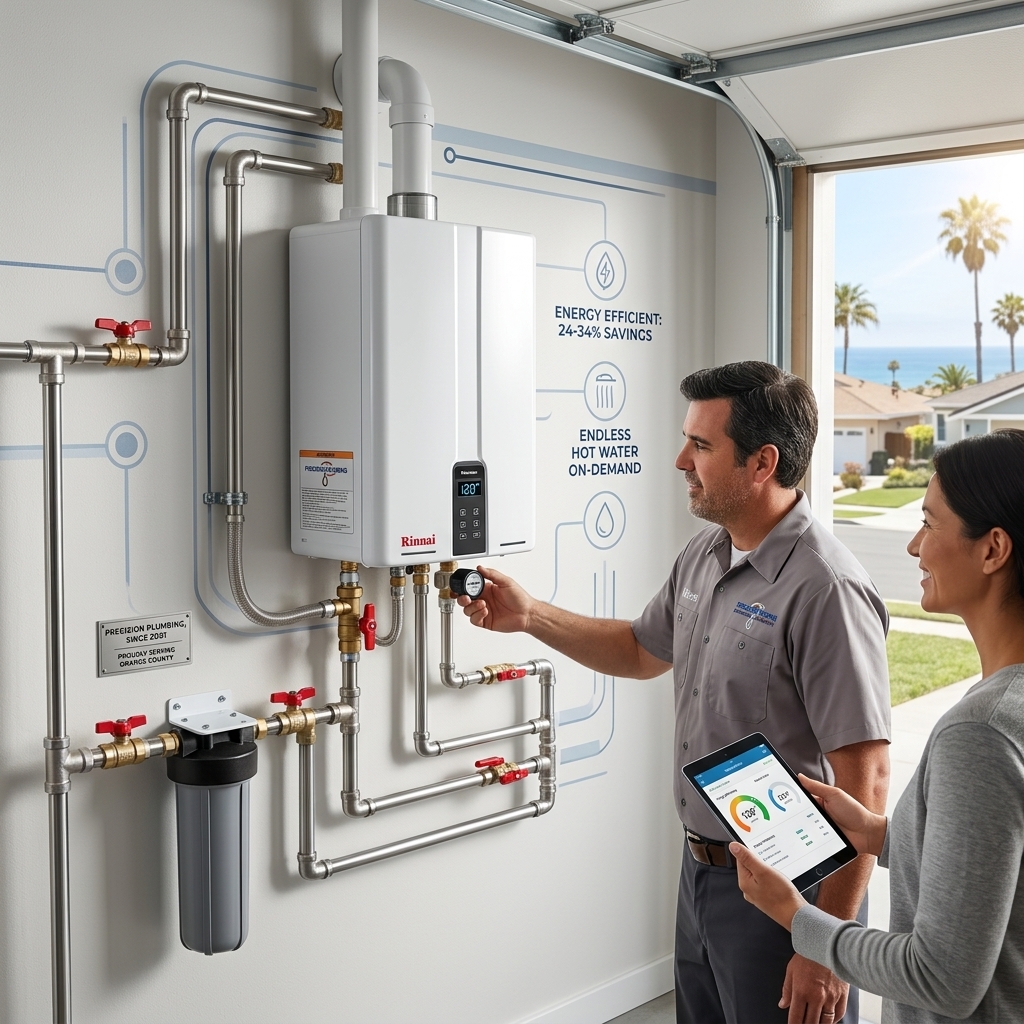
Every home is different. Venting options, electrical capacity, gas line routing, and water hardness all influence which tankless system suits your property. An inspection takes guesswork out of the recommendation and prevents costly surprises mid-project.
During inspection, we assess your current water heater’s location, verify gas or electrical availability, check for space constraints, evaluate your home’s water hardness (which affects maintenance needs), and ask detailed questions about your household’s hot-water usage. This information shapes a recommendation tailored specifically to your situation, not a generic one-size-fits-all suggestion.
Homeowners who invest 30-45 minutes in an on-site inspection typically feel more confident in their decision and experience smoother, faster installations. You understand exactly what’s happening, why, and what the timeline and cost will be before we order equipment or obtain permits.
What to do next: Call us at 949-235-1188 to schedule your free on-site inspection. Let us know your preferred days and times, and we’ll confirm availability within 24 hours.
Get Your Free Estimate Today
If your household is running short on hot water, tired of watching utility bills climb, or simply ready to upgrade to a more reliable, efficient system, we’re ready to help. Our free estimate includes a thorough on-site inspection, equipment recommendation, cost breakdown, timeline, and warranty details. No hidden fees, no pressure, just clear information so you can decide with confidence.
Orange County homeowners have trusted Precision Plumbing for over 25 years because we show up on time, do quality work, stand behind our installations, and treat your home with respect. We offer senior and veteran discounts, maintain a 100% satisfaction guarantee, and are available 24/7 for emergencies.
Call us at 949-235-1188 today to schedule your free estimate, or visit Irvine service for information about our service areas. We’ll diagnose your situation, explain your options, and help you move forward with confidence. Let’s get your home upgraded to reliable, efficient, on-demand hot water.
Frequently Asked Questions (FAQ)
How long does a tankless water heater installation typically take?
We usually complete most tankless installations in a single day, though the timeline depends on your home’s setup and whether we need to modify any gas or water lines. During our on-site inspection, we’ll give you an accurate estimate so you know exactly what to expect. Our licensed technicians work efficiently to minimize disruption to your daily routine.
What kind of savings can we expect with a tankless water heater?
We typically see our customers reduce their water heating costs by 24-34% annually compared to traditional tank systems, since tankless units only heat water when you actually need it. Your specific savings depend on your household’s hot water usage patterns and local utility rates. We’ll review your current water heater’s performance during our free estimate and show you realistic projections for your situation.
Is a tankless water heater the right choice for every Orange County home?
We recommend an on-site inspection to determine if a tankless system makes sense for your property, as factors like your home’s natural gas capacity, water pressure, and simultaneous hot water needs all play a role. Most homes and businesses we serve in Orange County are excellent candidates, but we want to diagnose your specific setup before making any recommendations. Call us at 949-235-1188 and we’ll discuss whether an upgrade makes sense for you.