

Table of Contents
- 1. Epoxy Pipe Coating: Sealing Pipes Without Excavation
- 2. Trenchless Repiping Technology: The Modern Alternative to Full Replacement
- 3. Directional Boring: Precision Installation Beneath Your Property
- 4. Cured-in-Place Pipe Lining: Restoring Pipes from the Inside Out
- 5. Spot Repair Methods: Targeted Solutions for Localized Damage
- 6. Why We Recommend On-Site Inspection Before Any Repiping Work
- 7. Understanding Your Repiping Options: What Works Best for Your Home's Age and Condition
- Frequently Asked Questions (FAQ)
1. Epoxy Pipe Coating: Sealing Pipes Without Excavation
When your home’s water lines fail, the thought of excavation work tearing up your yard, driveway, or foundation is understandably stressful. The good news is that modern plumbing has evolved far beyond the dig-and-replace approach. At Precision Plumbing, we’ve spent over 25 years helping South Orange County homeowners restore their water systems using minimally invasive repiping methods that protect your property while solving the underlying problem.
This guide walks you through seven proven techniques we use to repair or replace damaged pipes with minimal disruption. Whether you’re dealing with corrosion, leaks, or outdated galvanized lines, understanding your options empowers you to make an informed choice.
Epoxy pipe coating is one of the least invasive options available. Instead of removing old pipes, we clean the interior and apply a thin epoxy barrier that seals corrosion and prevents future leaks.
This method works best for homes with corroded copper or galvanized steel pipes that are still structurally sound but showing signs of rust or mineral buildup. The epoxy hardens inside the pipe, creating a protective layer that typically extends the life of existing plumbing by 10-15 years.
The process itself is straightforward: we access your pipes through existing fixtures or small openings, flush out debris, apply the epoxy coating, and cure it according to manufacturer specifications. Your home remains fully functional throughout, and there’s zero excavation required.
What to do next: If you suspect corrosion but want to avoid major disruption, ask us to perform a video inspection of your pipes. We’ll determine if epoxy coating is viable for your system and provide a no-obligation quote for the work.
2. Trenchless Repiping Technology: The Modern Alternative to Full Replacement
Trenchless repiping technology represents a game-changer for homes that need complete pipe replacement. Rather than digging trenches across your property, we install new pipes through a series of small access points using specialized equipment and directional installation methods.
This approach is ideal when existing pipes are deteriorating beyond repair or when you’re upgrading to modern materials like PEX or copper. Trenchless methods significantly reduce labor costs, eliminate landscape damage, and complete the job in days instead of weeks. Your driveway, garden, and foundation remain untouched.
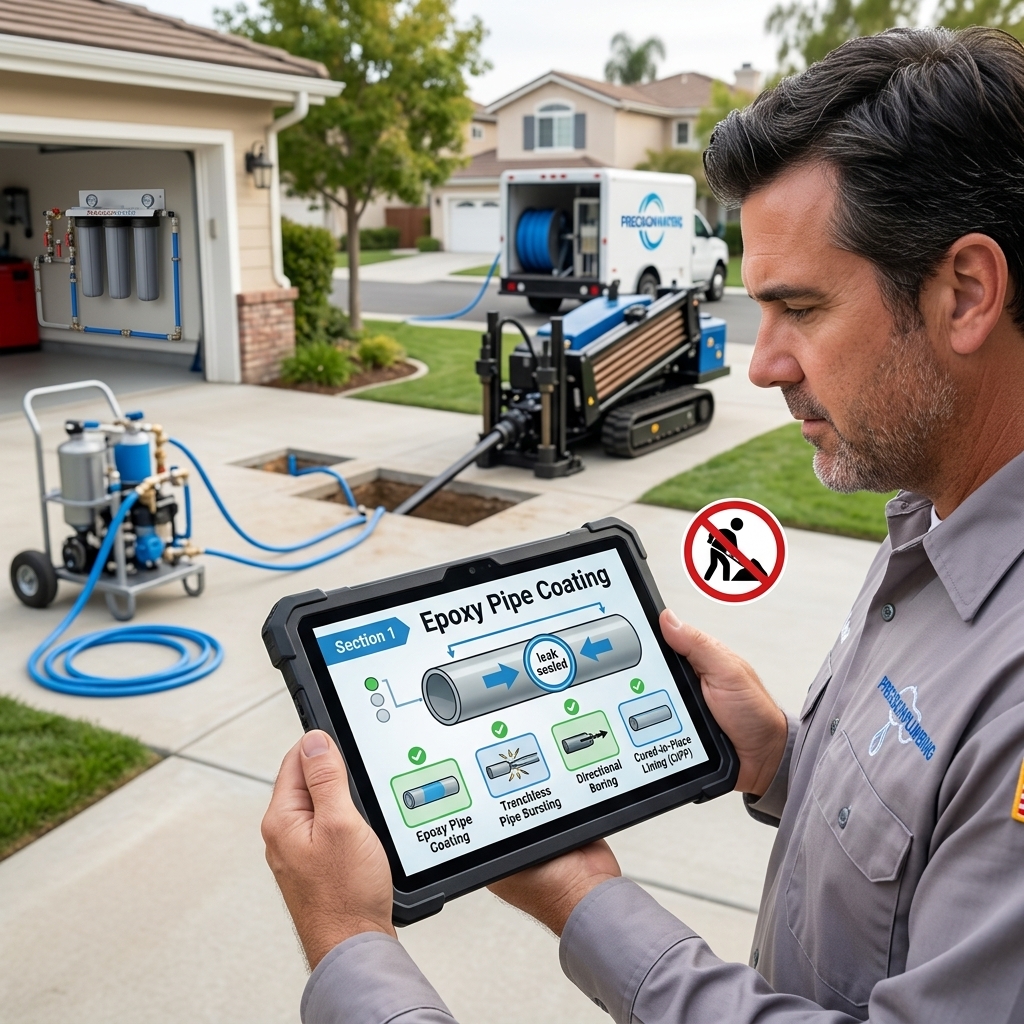
We typically use one of two trenchless strategies: directional boring for new pipe runs beneath obstacles, or pipe bursting for situations where we replace an old line with a new one in the same path. Both preserve the integrity of your property while delivering durable, code-compliant plumbing.
What to do next: Schedule a free estimate so we can assess your home’s layout and determine which trenchless method best fits your property and budget.
3. Directional Boring: Precision Installation Beneath Your Property
Directional boring allows us to install new water lines or gas lines beneath your yard, under driveways, or even under structures without breaking ground. We use a small drilling head guided by GPS and sensing equipment to create a precise path for the new pipe.
This method is particularly valuable for South Orange County properties with mature landscaping, pool features, or hardscaping you want to preserve. The boring rig requires only a small launch pit and exit pit, typically four to six feet each. Once the path is clear, we pull the new pipe through and cap off the access points.
The precision of directional boring means we avoid utility lines, tree roots, and other underground obstacles. It’s also faster and cleaner than traditional trenching, reducing the footprint on your property to just a couple of small work areas.
What to do next: Call us at 949-235-1188 if you’re replacing a main water line or dealing with a slab leak that would benefit from rerouting pipes around the foundation.
4. Cured-in-Place Pipe Lining: Restoring Pipes from the Inside Out
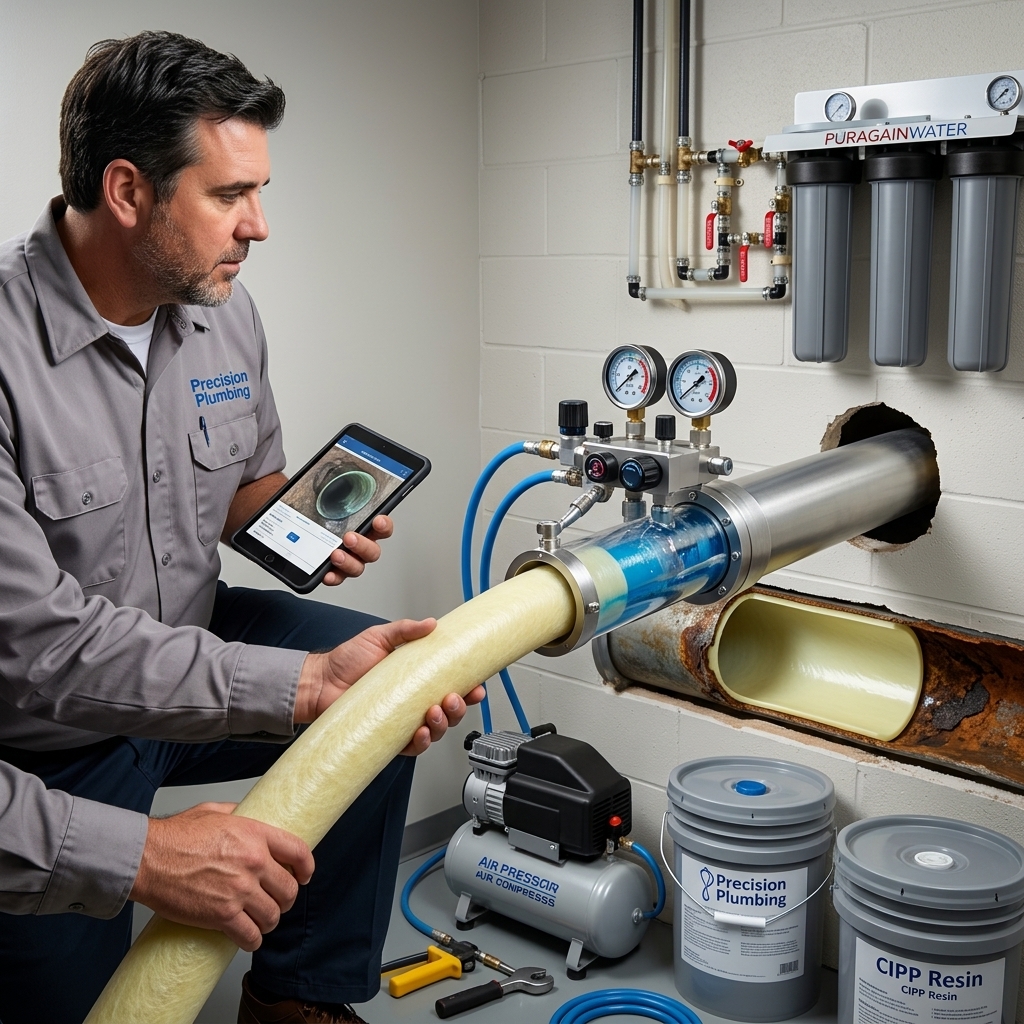
Cured-in-place pipe lining (CIPP) is a sophisticated method that rehabilitates damaged pipes without removal. We insert a resin-saturated felt tube into the damaged pipe, then inflate or cure it to form a new inner wall that’s bonded to the existing pipe.
This technique works exceptionally well for corroded sewer lines, cast iron pipes with multiple small leaks, or any pipe that’s still in the wall but showing signs of deterioration. The new lining is epoxy-based and typically adds 30-40 years of service life to your plumbing system.
Because CIPP doesn’t require excavation, it’s one of the most cost-effective options for homes with foundation concerns or where digging would be prohibitively expensive. We access the pipe through cleanouts or small openings, perform the lining process, and your system is immediately back in service.
What to do next: If you have recurring leaks or slow drains in older pipes, we recommend an on-site inspection to evaluate whether CIPP is appropriate and will solve your specific problem.
5. Spot Repair Methods: Targeted Solutions for Localized Damage
Not every leak requires replacing an entire pipe run. Spot repair methods target isolated damage, pinhole leaks, or small cracks without disrupting the rest of your system.
We use techniques like epoxy patches, compression sleeves, and localized section replacement to address single problem areas. This approach is ideal for homeowners who’ve identified specific failing sections through leak detection services. You pay only for the repair you need, not a whole-house replumbing project.
Spot repairs also buy time if you’re planning a phased repiping project. We can stabilize a leaking section while you plan a broader upgrade to your water lines or prepare for trenchless repiping work down the road.
What to do next: If you’ve noticed water stains, damp walls, or reduced water pressure in specific areas of your home, contact us for a diagnostic visit. We’ll pinpoint the exact location and recommend the most economical repair.
6. Why We Recommend On-Site Inspection Before Any Repiping Work
Here’s what we’ve learned over 25 years: every home’s plumbing is different. The right minimally invasive solution depends on your home’s age, the materials already in use, your water pressure needs, and local building codes.
An on-site inspection is non-negotiable because it reveals hidden factors that affect your choice. We use video inspection equipment to see inside your walls and foundation. We check water pressure, flow rate, and signs of corrosion. We assess your property’s layout to determine which access points work best and which installation method fits your landscape.
Without this inspection, you might invest in a method that doesn’t address the root cause or doesn’t work with your specific property. That’s why we always recommend starting with a professional assessment.
What to do next: Schedule your free inspection by calling 949-235-1188. We’ll diagnose the problem, explain your options, and provide a no-obligation quote for the work.
7. Understanding Your Repiping Options: What Works Best for Your Home’s Age and Condition
Choosing the right repiping method boils down to three factors: your home’s age and pipe material, the extent of the damage, and your budget and timeline.
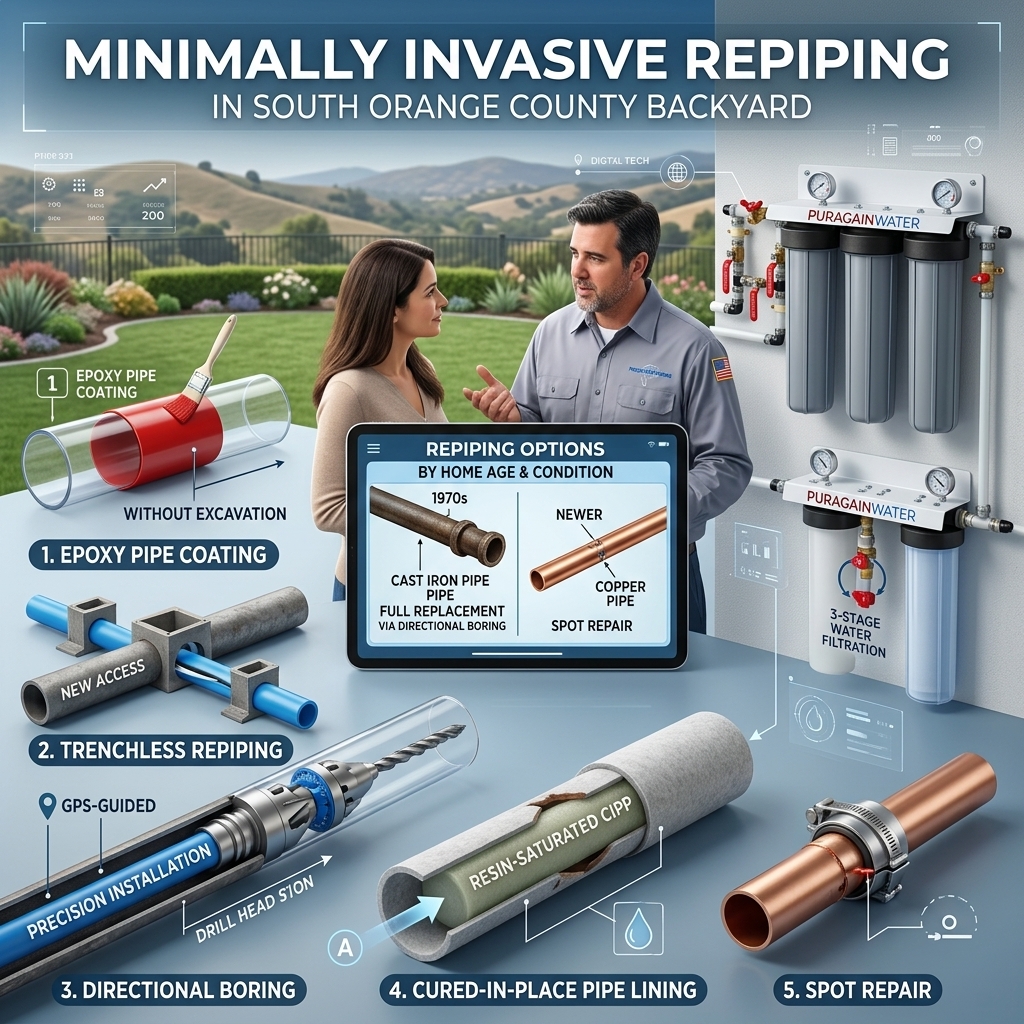
Older homes (pre-1970s) with galvanized steel or cast iron typically benefit from trenchless repiping or CIPP lining. These homes often have widespread corrosion that makes spot repairs temporary fixes. Upgrading to modern PEX or copper gives you reliability and peace of mind for decades.
Mid-range homes (1970s-1990s) with copper or early PEX may only need spot repairs or epoxy coating if the damage is localized. A thorough inspection will reveal whether you have systemic corrosion or isolated problem areas.
Newer homes (1990s-present) with PEX or modern copper rarely need full repiping unless there’s a specific failure like a slab leak or a manufacturing defect. Directional boring or targeted repair typically resolves the issue without disrupting your whole system.
Budget also shapes your decision. Epoxy coating and spot repairs cost less upfront but may extend only 10-15 years of life. Trenchless repiping or CIPP costs more initially but provides 30-40 years of durability and eliminates future emergencies. We’ll present both the immediate solution and the long-term value so you can choose confidently.
What to do next: Don’t guess about your pipes. Contact us at 949-235-1188 for a same-day or next-day appointment. We’ll assess your home’s condition, explain which minimally invasive method solves your problem, and provide a detailed estimate with no pressure to decide immediately.
At Precision Plumbing, our 100% satisfaction guarantee means you can trust that we’ll recommend the solution that’s right for your home, not the one that generates the biggest bill. We’re licensed, insured, and committed to protecting your property while delivering reliable plumbing for the next 25 years.
Frequently Asked Questions (FAQ)
What makes minimally invasive repiping better than traditional full replacement?
We’ve found that minimally invasive methods like epoxy lining and trenchless technology preserve your property’s integrity while addressing pipe damage effectively. Traditional excavation disrupts landscaping, driveways, and foundations, whereas our non-destructive approaches tackle corrosion and leaks from inside existing pipes or through precision boring. You avoid costly restoration work and get your water lines restored faster, often within a day or two rather than weeks.
How do we determine which repiping method is right for my home?
We recommend an on-site inspection so we can assess your pipe material, age, layout, and the specific damage affecting your system. During this visit, we’ll diagnose the issue and explain your options without technical jargon, showing you what each method involves and what you can expect. Once we understand your home’s unique situation, we’ll provide a no-obligation quote recommending the most practical solution for your needs.
Can you repair a slab leak without tearing up my foundation?
Yes, we can address slab leaks using trenchless repiping or directional boring techniques that bypass the need for excavation under your home. Our slab leak detection technology pinpoints the exact location non-destructively, and then we route new lines around or above the foundation depending on your home’s configuration. We’ll discuss all available options during your free estimate so you understand the approach before work begins.